Noah in Search of Land
Water Has No Plot

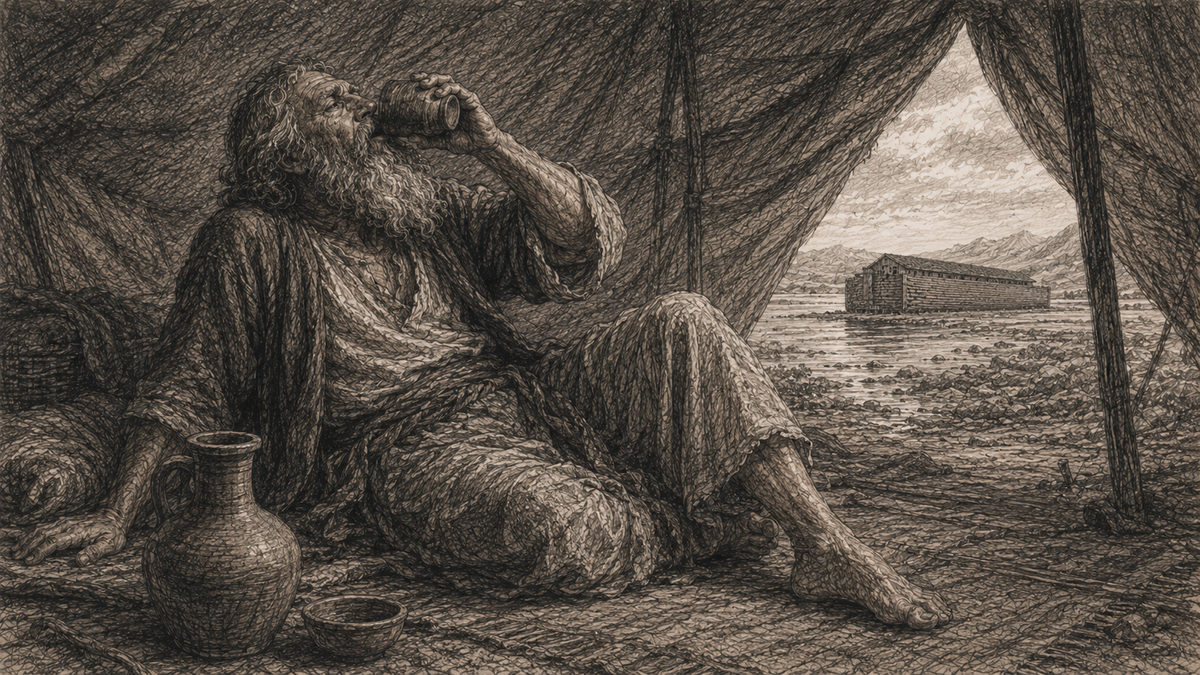
Note to reader: Given the current horror show of antisemitism, from the left and now from the right, I sometimes wonder why I bother with posts like this. But to stop doing the work would be its own kind of defeat. We need the fight, and we need the reminder of what we are fighting for.
Enough said. Here’s the third Tanakh Improvisation.
It’s hard not to see Noah as kind of second-rate.
That may sound unfair. After all, the Torah introduces him with what seems like high praise:
נֹחַ אִישׁ צַדִּיק תָּמִים הָיָה בְּדֹרֹתָיו
Noah was a righteous man, blameless in his generations.
But that last phrase is odd. Blameless in his generations. Meaning what, exactly?
Rashi preserves both possibilities.
Some of our Rabbis explain it (this word) to his credit: he was righteous even in his generation; it follows that had he lived in a generation of righteous people he would have been even more righteous owing to the force of good example. Others, however, explain it to his discredit: in comparison with his own generation he was accounted righteous, but had he lived in the generation of Abraham he would have been accounted as of no importance (cf. Sanhedrin 108a).
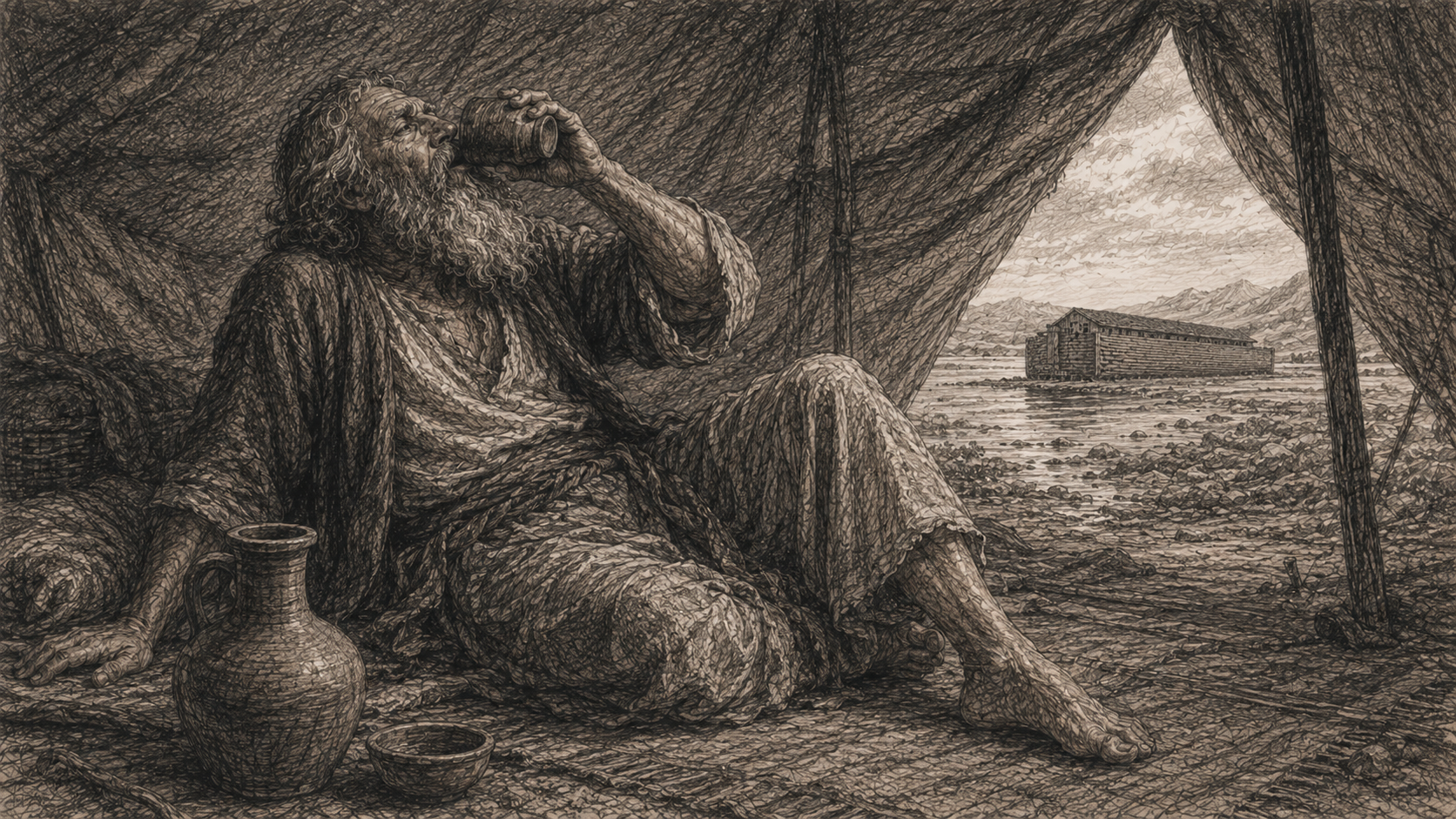
Even as a kid, hearing the story of Noah at Temple Emanuel in Chicago, I never quite bought into him as a hero. It’s not just that he gets drunk and naked after the flood. Honestly, I can respect that. After a hundred and fifty days in a sealed wooden box being whipped around without Dramamine, I’d want a drink too, once the nausea dissipated.
Maybe part of the problem is that I don’t really like the sea and what it represents. Of course, Noah is not technically at sea. This is a flood on dry land. All of it. But once the water covers everything, the difference is academic. You are still floating. You are still trapped. You are still surrounded by an undifferentiated mass of wet motion.
Shipping Box
Richard Elliott Friedman points out that the ark is not really a boat. It is a box. A boat has, or should have, direction. A box implies containment. Noah is not sailing toward anything. He is being preserved.
I would have been puking my guts out in that thing. But at least I’d be preserved.
Maybe this is also why I don’t love Debussy’s La Mer. Don’t get me wrong: I love Debussy, especially the piano music. But his orchestral suite, La Mer, gives me a headache. It does evoke the sea — brilliantly — but like the sea, it feels to me like an undifferentiated mass of flowing. Beautiful, yes. Magnificent, yes. But the point is to get to land.
I want land.
So did Noah. He keeps sending out birds to see if there is any dry land yet. The raven goes out. Then the dove. Then the dove again. Then finally, the dove returns with the olive leaf. It’s a pretty image, but Noah wasn’t looking for pretty: he was looking for evidence that the world has edges again. That there is something solid somewhere. That the box will not drift forever.
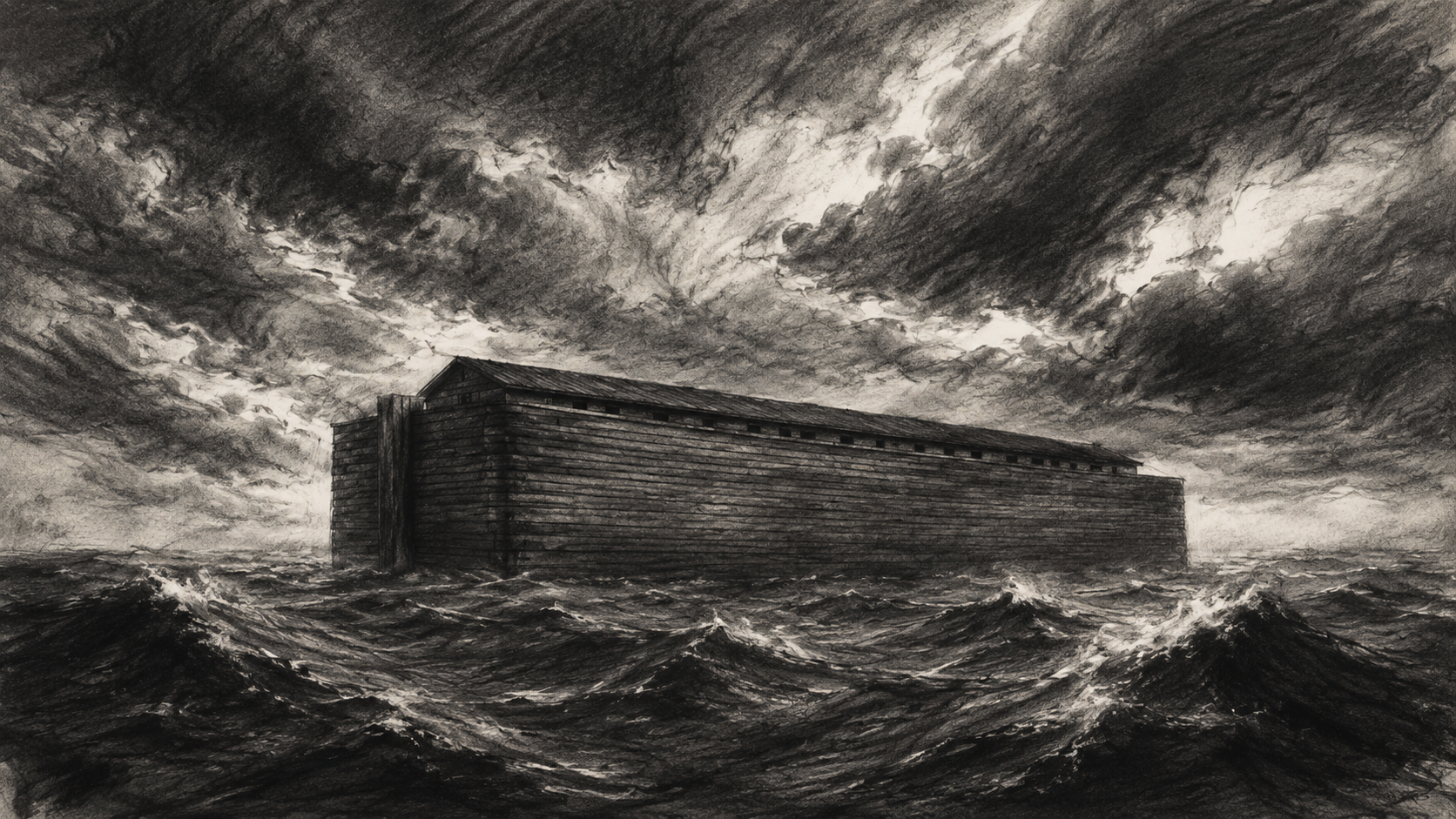
Because the sea is not only nauseating. It is boring. Monotonous. It all looks the same until there is a storm, and then it is violent, but even the violence is undifferentiated. Water, like much improvisation in jazz or jam bands, has no plot. It’s all gesture and force, no real story.
So in that sense, I relate to Noah. Maybe too much. Maybe he was both seasick and bored. I would be.
But something still bothers me about him.
The Passivist
Noah seems passive. Not exactly the protagonist of his own story, but a man being pushed around like the box itself. What is he doing, exactly? He builds what he is told to build. He gathers what he is told to gather. He enters when told to enter. He leaves when told to leave.
To be fair, this may be the point. The covenant with Noah is the first biblical covenant. The warm-up act before the main covenantal drama: Abraham, Moses, Israel. Noah comes before there are Jews at all; in a sense, his insufficiency helps make Abraham necessary. He certainly comes before the long Jewish habit of arguing with God and each other. Noah may not know yet that a covenant can involve protest—that one can answer God back.
Abraham bargains. Moses protests. Noah measures lumber.
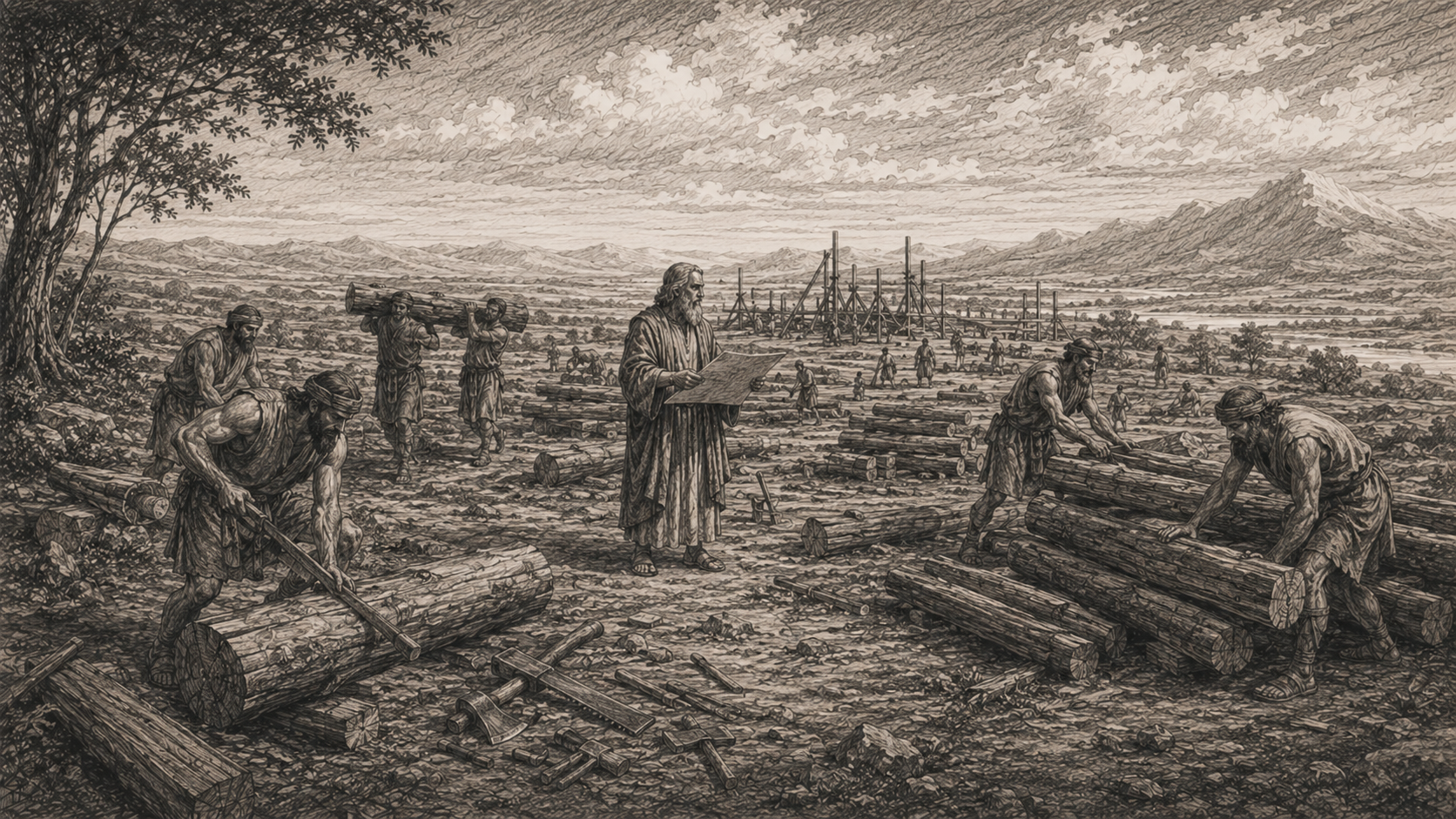
This does not make him contemptible. It may make him early to the party. He is not yet the biblical human being who wrestles, crosses, demands, sings, remembers, argues. He is obedient. He is useful. Not a useful idiot. Just a survivor. But he does not yet transform survival into something transcendent.
In this story, God is the protagonist. God sees the violence of the earth. God regrets, destroys, preserves, remembers. God makes the covenant. God moves the pieces — a regular Deus ex machina, that God is.
Noah floats in a box. Fine. That’s how Moses got started too. Floating in a box, down the Nile. But that was just the beginning of his story. For Noah, it is the story.
Ad Nauseam
As I sat down to improvise this piano piece, I had a few goals.
First: sound like water, storm, turbulence—without the minimalist monotony.
Second: do not sound like Debussy.
Third: do something, get somewhere. Get to musical land.
This is harder than it should be, because Debussy more or less created the modern musical sea. (Well, him and Ralph Vaughan Williams, but as much as I like him, it’s hard to take seriously a work that begins with the chorus intoning, “Behold, the Sea!”) Even if I don’t particularly like La Mer, water is everywhere in his music: shimmer, blur, reflection, foam, light, surface, depth. Once you think “music” and “water,” Debussy comes flooding in. This may be why I ultimately prefer Ravel among the big French Impressionists: he’s grounded!
But I also did not want to get sunk in an endless arpeggiated mass of sea. That is too obvious. You put your hands on the piano, let them ripple, blur the harmony, and suddenly you are in that beautiful, dangerous wash where everything flows to nowhere: waves of sound without a point.
I wanted the flood, the storm, the nausea — but with the point of getting back to land.
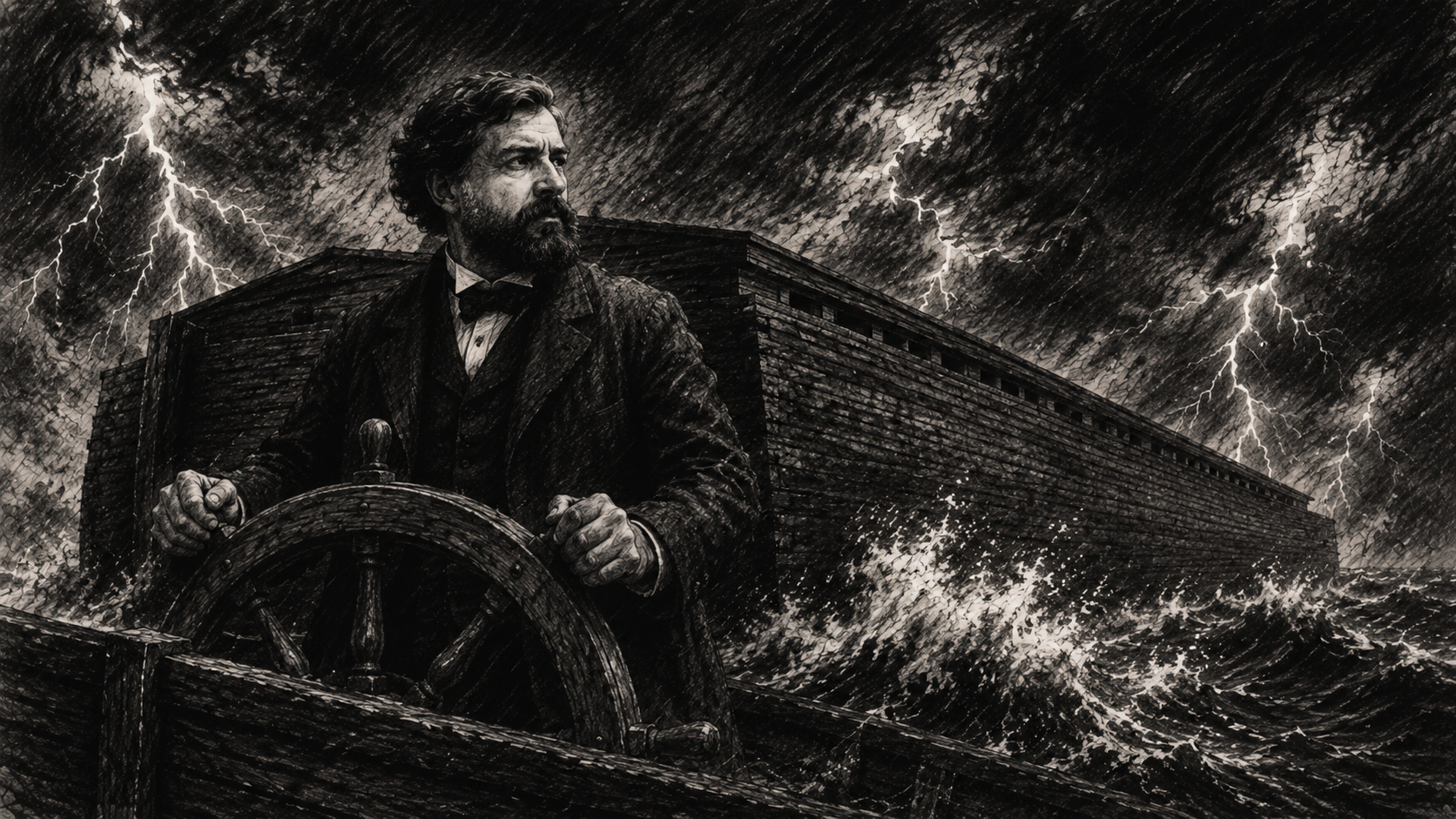
The resulting improvisation flows, but it does not settle. The tempo shifts abruptly, sometimes radically, as if the box itself has been shoved into a new current. There are moments of turbulence, moments of drift, moments where the music seems to be looking for ground under its feet.
That, finally, may be the difference between water and crossing.
The Bible keeps returning to water, but rarely as a home. Creation begins over the deep. Noah survives the flood. Moses is drawn from the Nile. Israel crosses the sea. Jonah tries to flee by ship and ends up inside another kind of box. Again and again, water is the place of danger, unmaking, suspension, and rebirth.
But the point is not to dwell there.
The point is to cross.
The Hebrews — ivrim — are the ones who cross over. They get to the other side. They do not wade in the water for its own sake. They pass through it: nauseous (the stiff-necked people), running for their lives, unfinished, and looking for land.
Noah is not Abraham. He is not Moses. He is not yet Israel.
He is a man in a box, preserved by God, carried over the wreckage of the world. We’re still doing that.
Maybe that is enough for one generation.
Maybe being “blameless in his age” means exactly that: not heroic, not prophetic, not yet able to argue, but able to survive the flood without becoming the flood.
And then, finally, to look for land.
Writers and musicians worth reading:
A few recommendations before I go: Substack, for all its flaws, has become my online community — the place where I read, argue, listen, and find writers and musicians who help me stay sane in the chaos. Here are a few people whose work has mattered to me lately:
Homayoon, Z: A brilliant fellow musician/improvisor, who writes beautifully not only about art in this artless age, but also exile from Iran as an Iranian Jew in a deeply personal way.
Sia: A powerful black woman from NYC who left the oppression that is so much of modern Islam and stands strongly for Jews and Israel.
Rabbi Steven Abraham: A rabbi from Omaha who writes deeply and beautifully about Israel and the Jewish experience; a sharp critic of both the left and right.
Hussein Aboubakr Mansour: (The Abrahamic Metacritique) A philosopher who grew up in Egypt, one of the deepest thinkers in the world (and he’ll let you know that). Much of his work is behind a paywall, but if you read nothing else, read this, for which he removed the paywall.
A Metacritique of PalestineNote to reader: What follows is long, it is demanding, and it will be unpleasant for every reader regardless of where they stand. I make no pretense of humility about what this essay attempts: I believe it to be the most comprehensive and honest account of this subject yet produced. The essay builds toward its most vital material in the final sections; …
As he says, it (like most of his work) is demanding and at times unpleasant. Make sure you’ve gotten the proper amount of sleep before tackling this one.