East of Eden: Way Over Yonder
Carole King in the Garden מִקֶּדֶם לְגַן־עֵדֶן

I woke up with Carole King’s “Way Over Yonder” running through my mind.
This happens to me fairly often: I wake up with music in my head. Usually it’s something I had listened to the day before, or something one of my students was working on, or, more often than not, something of my own that I’m composing, practicing, recording, revising, or trying to stop revising.
But I had not listened to “Way Over Yonder” recently. I had not been thinking about it. I had not gone back to Tapestry, though I was obsessed with the album when it came out in 1971. The song simply arrived.
Which is not to say it arrived for no reason.
In the first Tanakh Improvisations post, I mentioned Carole King as one of the great Jewish American songwriters whose Jewishness, at least as I hear it, often comes through indirectly: not in overt references to Jewish texts or ritual, but in the melodic turns, harmonic restlessness, moral tenderness, longing, irony, and emotional intelligence of the songs themselves. Jewish soul, if you want to call it that, carried into American popular music without announcing itself as Jewish.
So she was already somewhere in my mind.
At the same time, I have been rereading Richard Elliott Friedman’s modern translation and commentary on the Torah. I first read much of it during my earlier “Jewish period,” when I was composing a lot of Jewish choral and vocal music in my thirties. Coming back to it now has felt less like research than a return (תשובה: teshuva). I needed to get back to it for many reasons: for this project, for the music, for memory, for foundation, and also to place myself inside something Jewish that is not only a reaction to the ugliness of the present moment.
There is plenty to say about that ugliness. Too much, really. But as I said in the first post, other writers are already doing that work with clarity and force. This space is something else: a place where I can spend a little time each week with Jewish texts, Jewish sound, Jewish imagination, and Jewish questions without making the whole thing answerable to the daily catastrophe machine.
So there I was, rereading Genesis.
Specifically, I had arrived at the famous chapter where “the human,” as Friedman translates ha-adam, and the woman — aka Adam and Eve — eat from the forbidden tree, discover their nakedness, receive garments made by God, and are expelled from Eden. They must now work the soil. They must fend for themselves. They must live east of the garden.
The story has moved from paradise to consciousness, from abundance to labor, from innocence to memory. Welcome to the rest of human history.
Rereading this material has been powerful. The more time I spend with Genesis, the more astonishing it seems: this strange, compressed, inexhaustible collection of stories that became one of the foundations of Western civilization. It is hard to sit with these stories and not feel the tremendous weight of what they opened.
And I suspect it was that reading — the expulsion from Eden, the loss of ease, the first human exile — that triggered the Carole King earworm.
I have no idea whether King had Eden in mind when she wrote “Way Over Yonder.” I have no reason to assume she did. But once the song appeared in my head beside Genesis 3, I could not unhear the connection.
The song imagines a distant place of shelter, sweetness, and arrival:
Way over yonder
Is a place that I know
Where I can find shelter
From a hunger and cold
And the sweet tastin’ good life
Is so easily found
Way over yonder, that’s where I’m bound
Later:
Way over yonder
Is a place I have seen
In a garden of wisdom
From some long ago dream
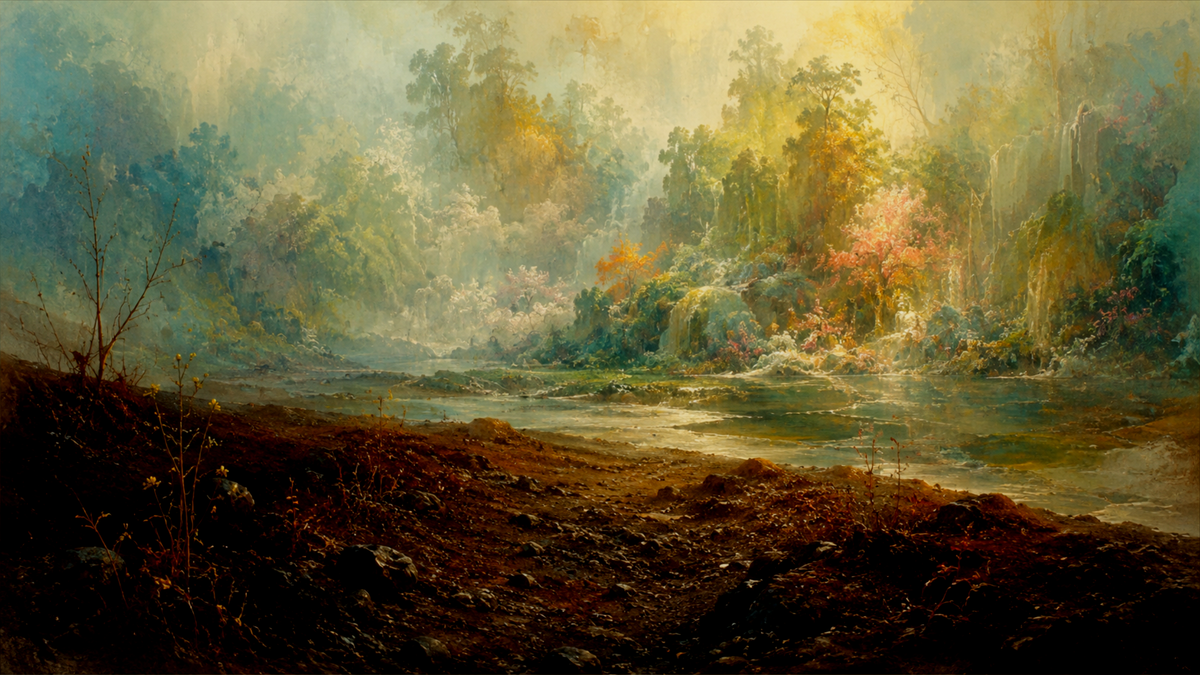
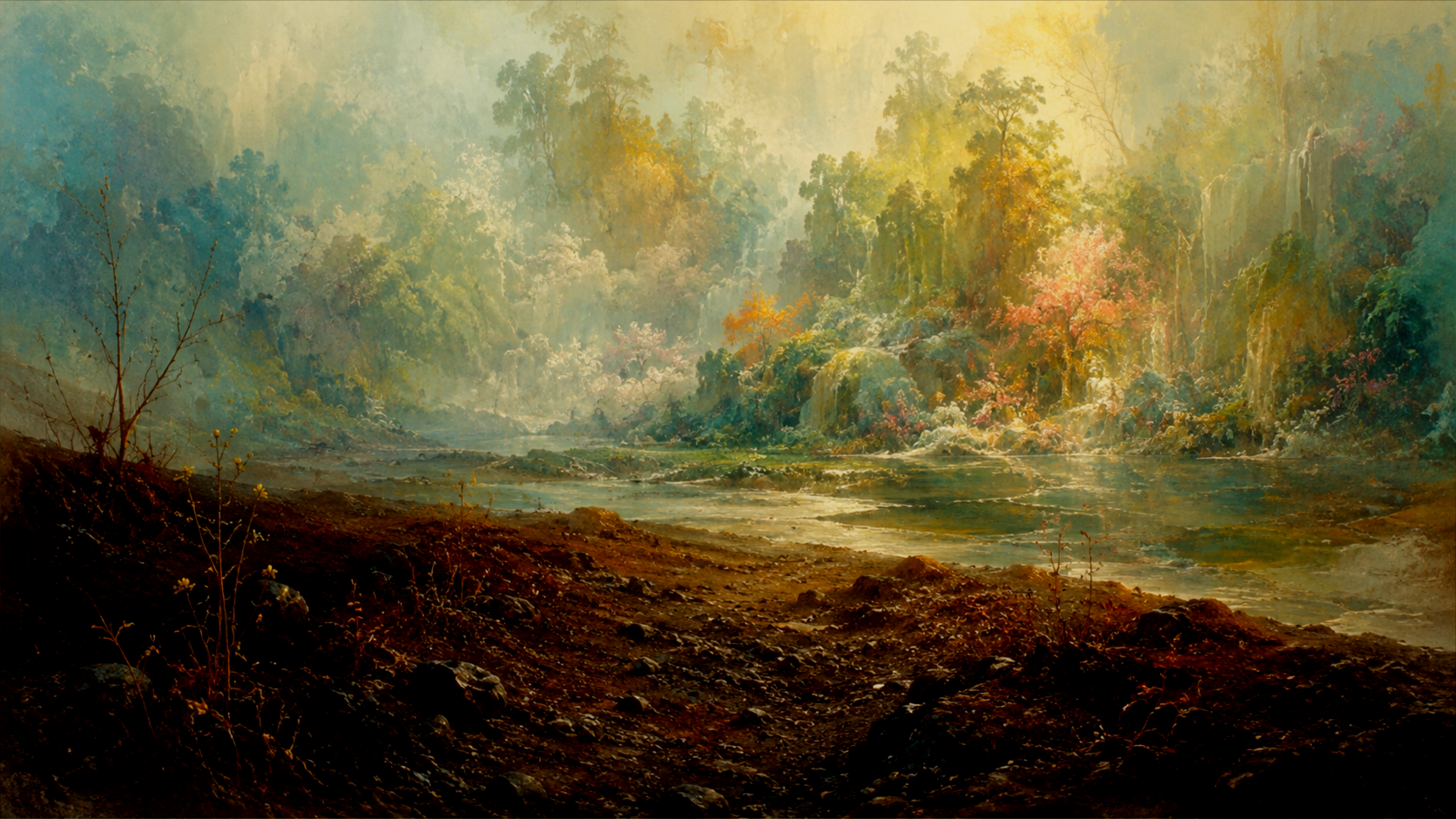
A garden. Wisdom. Distance. Longing for return. A place one has somehow seen, or dreamed, or remembered. A place not here.
Well, what else could she have been thinking of but the Eden story?

So when I sat down at the keyboard about an hour later, I knew I was going to play “Way Over Yonder.”
Except, of course, I didn’t.
Or not exactly.
That is usually how these improvisations begin. I sit down with some image, phrase, melodic fragment, or half-conscious association in mind, and then the point is not to render it faithfully. The point is to let it evolve.
So I circled the tune. I obscured it. Unredeemed it. I state the opening phrase but never fully. I darkened the harmony, bent it toward minor, reharmonized on the fly, and kept refusing the places where the song wants to open naturally into its own generosity. I never really arrived at the part that should bring release. I never allowed the music to become the song it remembered.
Instead, the piano became more questioning, more chromatic, more inward. It kept approaching the idea of return and then turning away from it. I added some strange effects and light percussion over the top — not as orchestration, but as commentary on the commentary on the…
The whole thing lasts about ninety-six seconds.
It stops before it resolves. Or it does resolve, and to a major key, no less, but the wrong one.
This seems right to me. The improvisation is neither a cover (more of an uncovering) nor a direct quotation (more of a deliberate misquotation). It is a memory of a song about a memory of a place. It is “Way Over Yonder” heard from the wrong side of Eden. Farther away than ever.
Or maybe it is Genesis 3 heard through Carole King.
Either way, the place is no longer directly accessible. It can only be glimpsed, misremembered, approached through music, or longed for from the other side.
Way over yonder is a place I haven’t quite found.
Here’s Carole performing it (with Abigale Haness) in the year I fell in love with her as a 10-year-old. She was then, and is now, one of the most lovely people on the planet.